

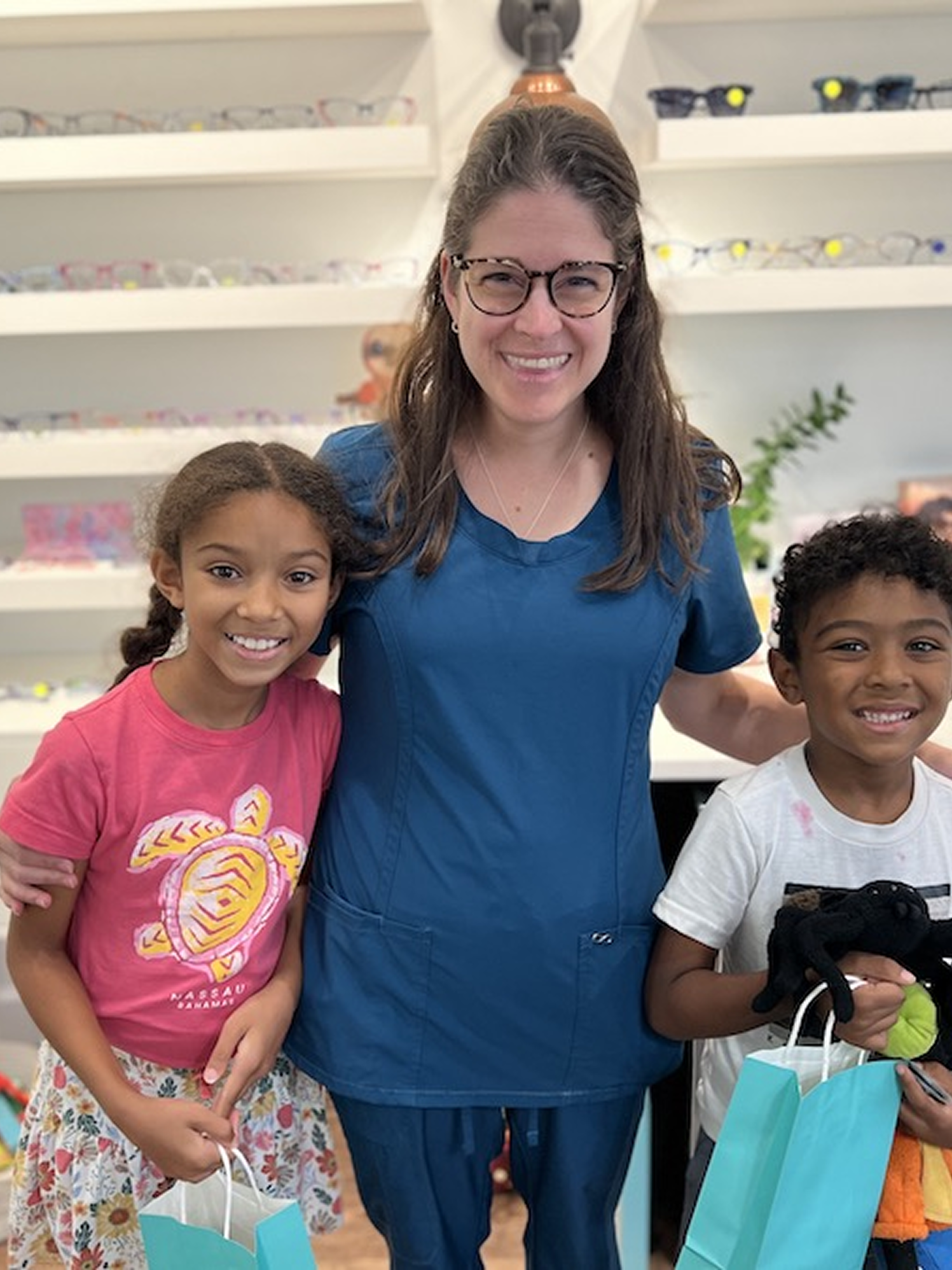
By Dr. Amber Teten, Pediatric Eye Doctor Chesapeake VA
As a parent, you want to ensure your child grows healthy and happy, and their vision plays a bigger role in that than most people realize. A large share of what young children learn happens through their sense of vision, so a knowledgeable pediatric eye doctor in Chesapeake VA should be tracking vision development alongside other milestones. Vision development and motor development actually guide each other: as your child’s eyes develop, their movement improves, and as their movement improves, so does their vision. Below, I’ll walk through the stages of a child’s vision development and offer some tips to support your child’s visual growth along the way.
A Baby’s View of the First Six Months
At birth, a baby’s vision is still developing, and they can only see objects clearly within about 8 to 10 inches of their face. They also tend to prefer high contrast patterns and bright colors, think black and white stripes or spots. As the weeks pass, their visual abilities improve and depth perception starts to develop, though it’s still much less refined than it will be later on.
You can support your baby’s visual development during this period with stimulating toys that use bold, high contrast patterns and bright colors. Mobiles that move and play music are especially helpful, since they build tracking skills. A piece of paper with different widths of black and white stripes, moved slowly back and forth, also works well as a tracking exercise, since it encourages your baby to move their head and eyes from side to side together. Before about four months, it’s common for one eye to wander or not track quite in sync with the other. That’s normal: a baby’s eye muscles are still building strength and coordination.
Plenty of tummy time also matters here, since it helps develop the neck and core muscles that support vision development. A baby’s visual development is closely tied to their overall physical development, so keeping up with age appropriate milestones matters. Tummy time looks different for every baby, some love it and some don’t, and it doesn’t have to be on the floor. Time on your chest while you’re reclined works the same muscles just as well.
Enormous Visual Progress in Months 6 to 12
Between 6 and 12 months, your baby’s visual abilities take a real leap forward. They’ll develop more advanced skills like depth perception and hand and eye coordination, and they’ll start recognizing familiar faces and objects. You might notice them reaching for your nose, chin, lips, hair, or even your glasses, and smiling when they spot mom, dad, or a sibling.
Toys that involve reaching and grasping, like stacking blocks and shape sorters, help support this stage. Crawling and exploring their surroundings also builds depth perception and hand and eye coordination. Keep offering high contrast toys and patterns, since they continue to stimulate visual development, and reading aloud is another great way to support both vision and a love of books. Vision and speech development tend to develop hand in hand during this stage too.
The Advanced Visual Skills of Toddlerhood
As your child moves into toddlerhood, their visual abilities become noticeably more advanced. They can distinguish colors, shapes, and sizes, and recognize and identify objects, people, and animals with growing confidence.
At this age, keep offering opportunities for exploration and play. Puzzles, blocks, and shape sorters are still great choices, along with activities like drawing, painting, and coloring.
It’s also worth limiting screen time at this stage, since too much screen exposure can work against healthy visual development. If your child does spend time on digital devices like tablets, phones, or TV, blue light glasses are worth considering. At Navigation Eye Care, our pediatric eye doctor in Chesapeake VA recommends blue light protection for patients who spend meaningful time on screens. Time outdoors is a good substitute for screen time, since it gives kids’ eyes a different kind of workout. Aiming for about 60 to 90 minutes outside daily is a helpful guideline, and it may also help limit the progression of nearsightedness, or myopia, as children grow. UV protection sunglasses matter too, even on overcast days. Navigation Eye Care carries a range of children’s sunglasses, both prescription and non prescription.
Eye Exams in Early Childhood
Regular eye exams with a qualified pediatric eye doctor are essential for good vision and eye health. These exams can catch potential vision problems early, which means earlier intervention and treatment when it’s needed most.
It’s recommended that children have their first eye exam with a pediatric eye doctor around six months of age, generally somewhere between 6 and 12 months. This exam helps identify anything that might be affecting vision development, and it’s also a good, low pressure introduction to eye care for both you and your child. After that, the next exam should happen around age three unless your child’s pediatric eye doctor recommends closer monitoring, and a comprehensive eye exam once a year is recommended from there on.
Supporting your child’s visual development is part of supporting their overall health and well being. Opportunities for play and exploration, reasonable limits on screen time, and regular eye exams all work together to help your child’s visual development progress the way it should.
If you have a child who needs their eyes checked by a qualified pediatric eye doctor in Chesapeake VA, we’d love to see you. Call the Navigation Eye Care team at 757 529 6889 or schedule an appointment online. We’re equipped to care for you and your whole family, and we’d love the chance to show you what a friendly, thorough visit looks like. We’ve been proud to serve as a pediatric eye doctor in Chesapeake VA for years, and we can’t wait to see you and your family.