
Parents often assume a quick vision screening at school is enough to make sure their child sees well. But here is the truth: screenings and pediatric eye exams are very different. A screening is like a quick snapshot, while a full exam is a complete picture. Knowing the difference can mean catching vision problems before they hold your child back in school or activities.
What school vision tests miss
School vision screenings are a great first step, but they only check a small piece of the puzzle. Most measure how well a child reads letters from a distance. What they do not check is just as important: how the eyes work together, how they track across a page, or how quickly they can shift focus from the board to a notebook.
That means a child could “pass” the screening but still struggle with reading, attention, or sports. For example, kids who lose their place while reading or complain of headaches may have vision issues a school test cannot find. Parents sometimes assume these are behavior problems, but often the issue is simply that the screening was not detailed enough.
This is why families in Chesapeake often feel relieved when an eye doctor uncovers what a school screening missed.
Comprehensive evaluations
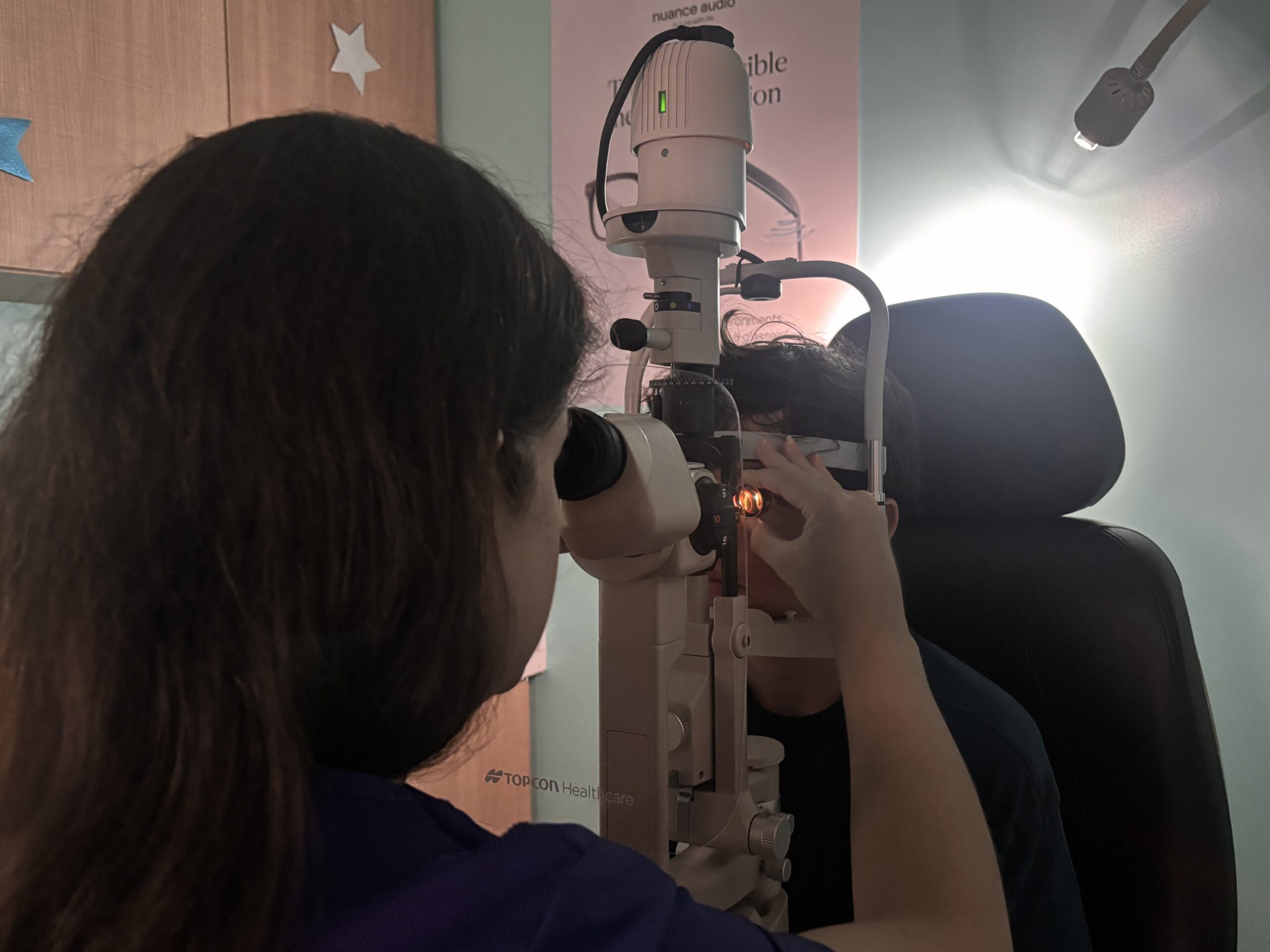
A pediatric eye exam is designed to be thorough. During a comprehensive evaluation, an eye doctor looks at more than just clarity of vision. The exam measures depth perception, eye alignment, focusing ability, and even how well the eyes move across a page.
It also checks for conditions like lazy eye or eye teaming problems, which can affect learning and development if left untreated. Early detection makes a huge difference. With the right care plan, kids can avoid years of frustration and get back to enjoying school and playtime.
Simply put, a full exam gives parents peace of mind. You know that every aspect of your child’s vision has been checked, not just the basics.
When to upgrade to a full exam
So when should you move past a school screening and schedule a comprehensive exam? Here are a few signs:
- Your child squints or sits very close to the TV or tablet
- They rub their eyes often or complain of tired eyes
- Teachers report that they lose their place while reading or struggle to stay focused
- Headaches show up after homework or reading sessions
- Glasses prescriptions change quickly from one year to the next
Even if your child shows no signs, experts recommend pediatric eye exams starting before kindergarten, with regular check-ins as kids grow. Early exams catch hidden issues and give kids the best chance for success.
A simple plan for parents
- Schedule a pediatric eye exam instead of relying on school screenings.
- Share what teachers have noticed with your eye doctor.
- Follow through on the treatment plan, whether it is glasses, contact lenses, or vision therapy.
This plan helps uncover hidden vision problems and makes sure your child has the tools to thrive in the classroom and beyond.
The success story
Imagine your child sitting in class, confidently raising their hand because reading finally makes sense. Picture them finishing homework without the headaches or meltdowns. That is the kind of transformation families see when they choose a full exam instead of relying only on a screening.
At Navigation Eye Care, we know how busy life can be and how easy it is to assume a school test covers everything. But your child’s future deserves more than a quick check. With our compassionate care and expertise, we make the process simple and reassuring.
Book your child’s pediatric eye exam today and give them the clear vision they deserve.