

If you’ve ever felt tired eyes, neck tension, or headaches after a long day on screens, you might have wondered what’s really causing it. Often, the answer comes down to a small but powerful factor: how your eyes align when focusing on near objects.
Neurolens is a specialized eyewear lens built with contoured prism technology, designed to correct that kind of eye misalignment, sometimes called binocular misalignment. It’s not the same as a typical prescription lens: instead of just sharpening what you see, it addresses how hard your eyes and brain have to work to bring images together, which is often the real source of daily strain, headaches, and neck tension.
Before you can get fitted with Neurolens, though, our team needs to measure exactly how your eyes are misaligned. That’s where the Neurolens measurement device comes in, and it’s what the rest of this article walks through.
How We Test for Misalignment
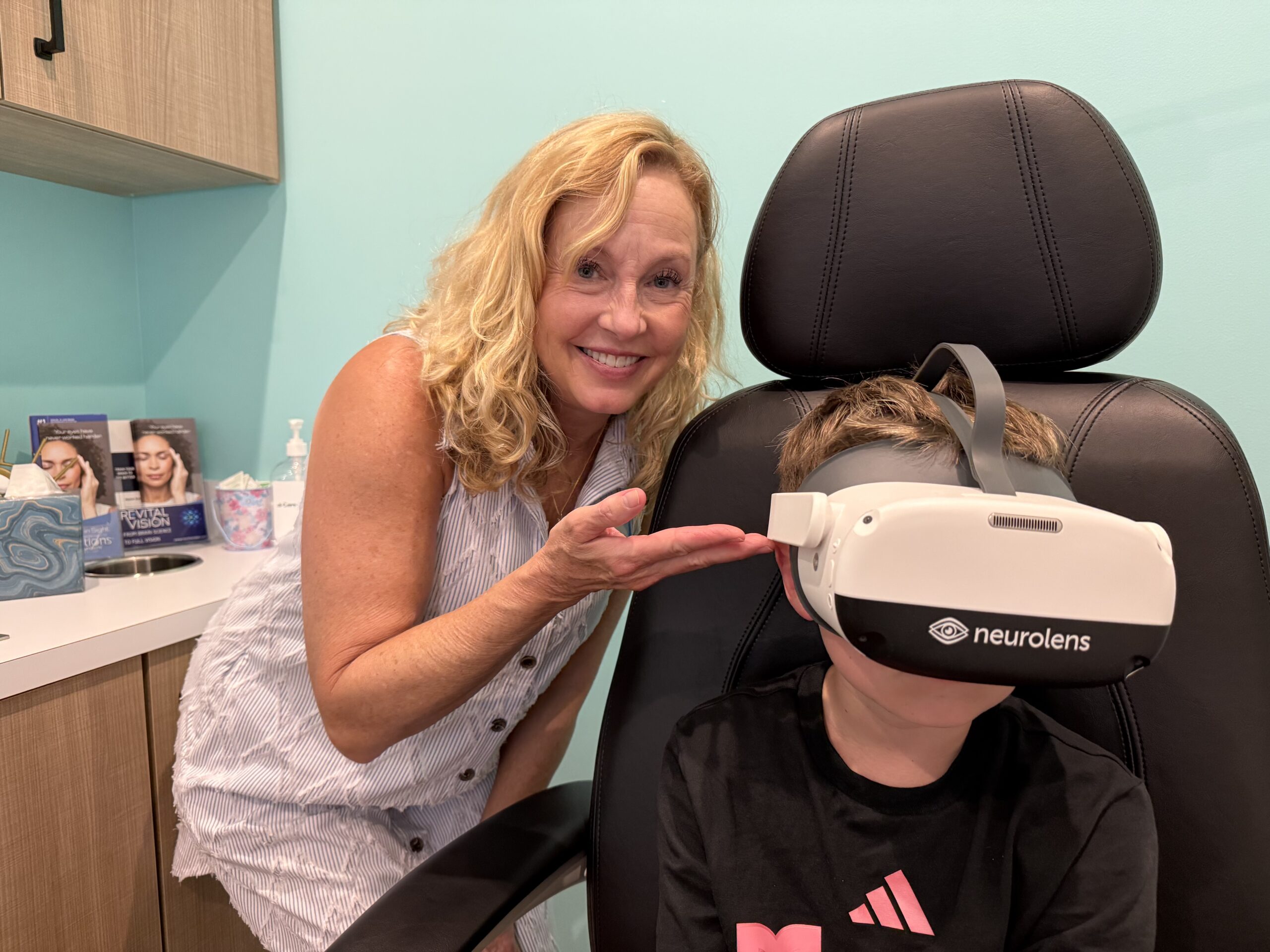
During your visit, our eye doctor will guide you through a quick, comfortable test using the Neurolens measurement device, also called the NMD. The device looks a bit like other vision screening tools, but it does something genuinely unique: it measures how your eyes naturally align when focusing at different distances.
Here’s what happens, step by step:
- You look into the device, focusing on a simple target that appears to move slightly.
- As your eyes respond, the machine precisely tracks their movement and coordination.
- The NMD calculates any small misalignment between your eyes, something even a thorough standard eye exam might not detect.
This process takes just a few minutes and doesn’t involve any discomfort. Think of it as a stress test for your visual system, only much easier, with immediate insight into what’s really going on.
What the Scan Reveals
The scan doesn’t just show whether your vision is clear, it reveals how your eyes work together. Even a slight misalignment can cause your brain and eye muscles to overwork, leading to symptoms like:
- Headaches, especially at the end of the day
- Blurred vision after extended reading or computer use
- Neck or shoulder tension
- Dry or watery eyes
- Fatigue or dizziness after screen time
For many patients, the results are eye opening, literally. The Neurolens measurement device provides a personalized graph showing exactly where your eyes struggle to stay aligned. That data lets your eye doctor determine whether you’re a good candidate for Neurolens, which uses that same contoured prism technology to gently correct the imbalance and relieve the tension behind your discomfort.
It’s often the missing piece for people who’ve already tried new glasses or eye drops but still deal with daily strain.
Accuracy and Results
What makes the Neurolens measurement device so effective is its precision. Traditional exams rely on observation and patient feedback, but the NMD uses automated infrared eye tracking to measure movement within a fraction of a degree. That level of detail means your Neurolens prescription is based on objective data, not guesswork.
That accuracy shows up in real results. Many patients notice improvements within days of wearing Neurolens:
- Reduced eye strain during work or school
- Clearer, more comfortable vision
- Fewer headaches or neck pain
- Better focus and energy throughout the day
As one mom recently told us, “I didn’t realize how much my eyes were working overtime until they finally relaxed.”
At Navigation Eye Care, we love seeing that “aha” moment when patients experience real relief after years of putting up with visual discomfort.
Frequently Asked Questions
What is Neurolens?
Neurolens is a specialized eyewear lens made with contoured prism technology that corrects binocular misalignment, a small mismatch in how your eyes work together. Unlike standard prescription lenses, which only sharpen what you see, Neurolens addresses the underlying strain that can cause headaches, eye fatigue, and neck tension, especially after screen time.
What is the Neurolens measurement device?
The Neurolens measurement device, or NMD, is the diagnostic tool we use to detect binocular misalignment before fitting you with Neurolens. It measures precisely how your eyes align at different focusing distances, giving your eye doctor objective data to build a personalized Neurolens prescription.
Is the Neurolens measurement test uncomfortable?
No. The test is quick, generally just a few minutes, and doesn’t involve any discomfort. You simply look into the device and focus on a target while it tracks your eye movement.
How do I know if I need Neurolens?
If you regularly deal with headaches, eye strain, neck or shoulder tension, or fatigue after screen time, and glasses or eye drops haven’t fully resolved it, you may be a good candidate. The measurement test is the most reliable way to know for sure, since it can catch misalignment that a standard eye exam might miss.
Is Neurolens the same as regular glasses?
Not exactly. Neurolens lenses can be made with your existing prescription, but they include contoured prism technology on top of that correction, specifically to reduce the strain caused by binocular misalignment. Standard glasses only correct blur and clarity.
Find Your Comfort Again
If you’ve been struggling with eye strain, headaches, or fatigue after long hours of computer or device use, the Neurolens measurement device might be the key to understanding why. Our eye doctors at Navigation Eye Care in Chesapeake VA are trained to interpret your results and design a customized Neurolens solution that fits your visual lifestyle.
Your eyes deserve more than just clear vision, they deserve comfort.
Schedule your Neurolens evaluation today and see how advanced technology and compassionate care can help you rediscover relaxed, effortless vision.
Related Reading
- Understanding Neurolens: How It Can Improve Your Vision Comfort
- How Neurolens Works: The Science Behind Lasting Relief
- Neurolens Benefits You’ll Notice Day One and Beyond