
Is Screen Time Hurting Your Child’s Eyes?
Your kid’s face is lit up by a screen most waking hours. Tablet at breakfast, Chromebook at school, phone after dinner. You’ve probably wondered what that’s actually doing to their eyes.
It’s a fair question. And the answer is more nuanced than most articles online will tell you.
What Blue Light Actually Is (And What It Isn’t)
Blue light is a high-energy wavelength emitted by the sun, LED lights, and yes, every screen your child uses. It’s not a toxin. Some blue light is important for alertness and mood regulation.
The problem is dose and timing.
Kids today are getting concentrated blue light exposure in the hours right before bed, from devices held inches from their faces, for years on end. That combination creates two real concerns:
1. Sleep disruption. Blue light tells the brain it’s daytime by suppressing melatonin, the hormone that signals sleep. A child scrolling at 8pm is biologically wired to stay awake longer, sleep less deeply, and wake up less rested. For school-age kids, that compounds fast.
2. Eye strain. Near-focus digital tasks especially on small screens force the eyes to work hard for extended periods. The result is digital eye strain: tired eyes, headaches, blurred near vision, and the habit of rubbing their eyes constantly. This isn’t blue light alone; it’s also screen distance, font size, and unbroken focus time.
What blue light is not yet proven to do: cause permanent retinal damage in children at typical consumer exposure levels. Some early research raised concern; more recent reviews have been less alarming. We’ll tell you what the evidence actually supports — not what sells the most lens upgrades.
What Parents in Chesapeake Ask Us Most
At Navigation Eye Care, we see kids from across Chesapeake such as Great Bridge, Hickory, Greenbrier, Deep Creek and the questions from parents are remarkably consistent:
“Should my child be wearing blue light glasses?” “How many hours of screen time is too many?” “Could screens be making my child’s prescription worse?”
Here’s the honest answer to each.
Blue light glasses: helpful, but not magic. Blue light filtering lenses do reduce the high-energy wavelength reaching the eye. For kids who spend significant time on screens and report eye fatigue or trouble sleeping, they’re a reasonable tool. But they are not a substitute for managing screen time, and they won’t stop myopia progression on their own.
Screen time limits: the 20-20-20 rule is a starting point. Every 20 minutes of near screen work, have your child look at something 20 feet away for 20 seconds. This isn’t just advice, it’s a reset that gives the focusing muscles a break. Beyond that, the American Academy of Pediatrics recommends no recreational screen time beyond 1–2 hours per day for school-age children.
Screens and worsening prescriptions: This is the bigger concern right now. Near work, screen-based or not combined with insufficient time outdoors is a documented driver of myopia (nearsightedness) progression in children. Chesapeake kids spending summers inside rather than outside are at measurably higher risk. We take this seriously at NEC, which is why we offer myopia management for children whose prescriptions are progressing year over year.
What You Can Do at Home Starting Tonight
You don’t need to wait for an appointment to start protecting your child’s eyes. These habits make a real difference:
Cut screens 60–90 minutes before bed. This is the highest-leverage change you can make. The melatonin disruption from evening screen exposure is well-documented and it accumulates.
Get your kids outside. Outdoor light, even on a cloudy Chesapeake afternoon slows myopia progression. Two hours per day is the research target. It’s also the cheapest intervention available.
Screen distance matters. Phones held 8 inches from the face are harder on developing eyes than a monitor 24 inches away. Teach kids to hold devices at arm’s length and prop tablets rather than cradle them.
Reduce glare. Bright overhead lighting reflecting on a screen forces the eyes to work harder. Adjust screen brightness to match ambient light, or use a matte screen protector.
When to Bring Your Child In
Blue light is one factor in a bigger picture. An annual comprehensive eye exam catches problems that home adjustments can’t fix: undetected refractive errors, convergence insufficiency, early myopia progression, or issues affecting reading and learning.
If your child is squinting, avoiding reading, getting frequent headaches after school, or losing their place on the page those are signals, not quirks.
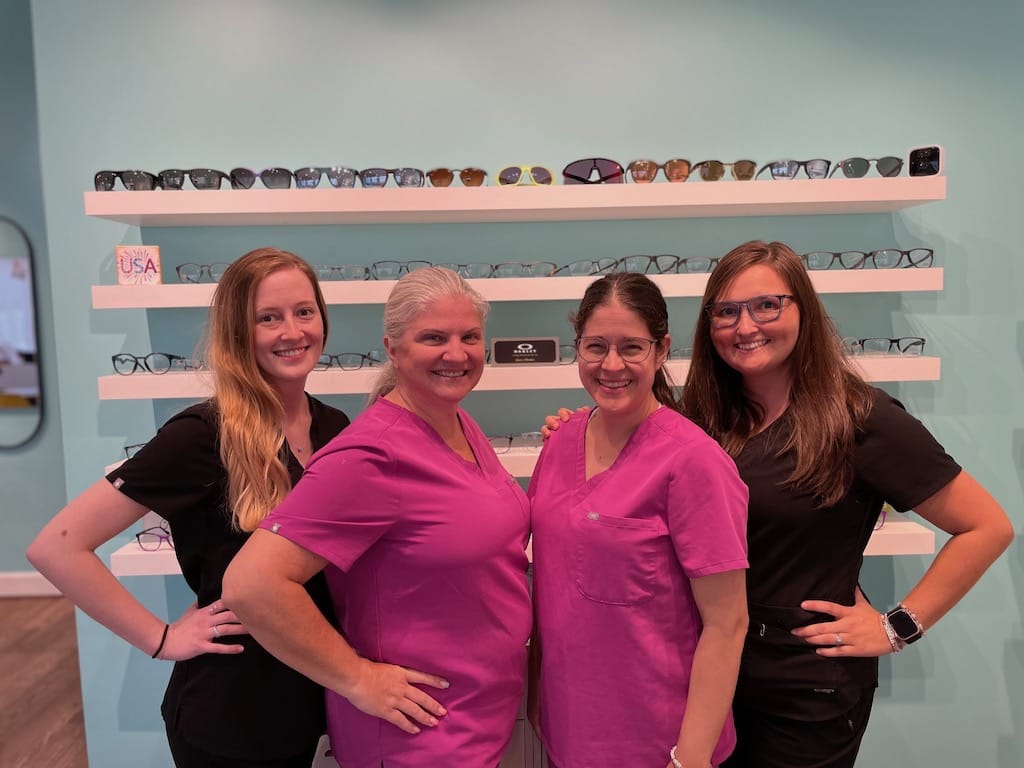
Dr. Amber Teten and the team at Navigation Eye Care specialize in pediatric eye care in Chesapeake. We’ll examine what’s actually happening with your child’s vision, give you straight answers, and recommend what’s genuinely useful, not what’s easiest to sell.
Schedule your child’s comprehensive eye exam today. Book Online or call us at (757) 529-6889.