

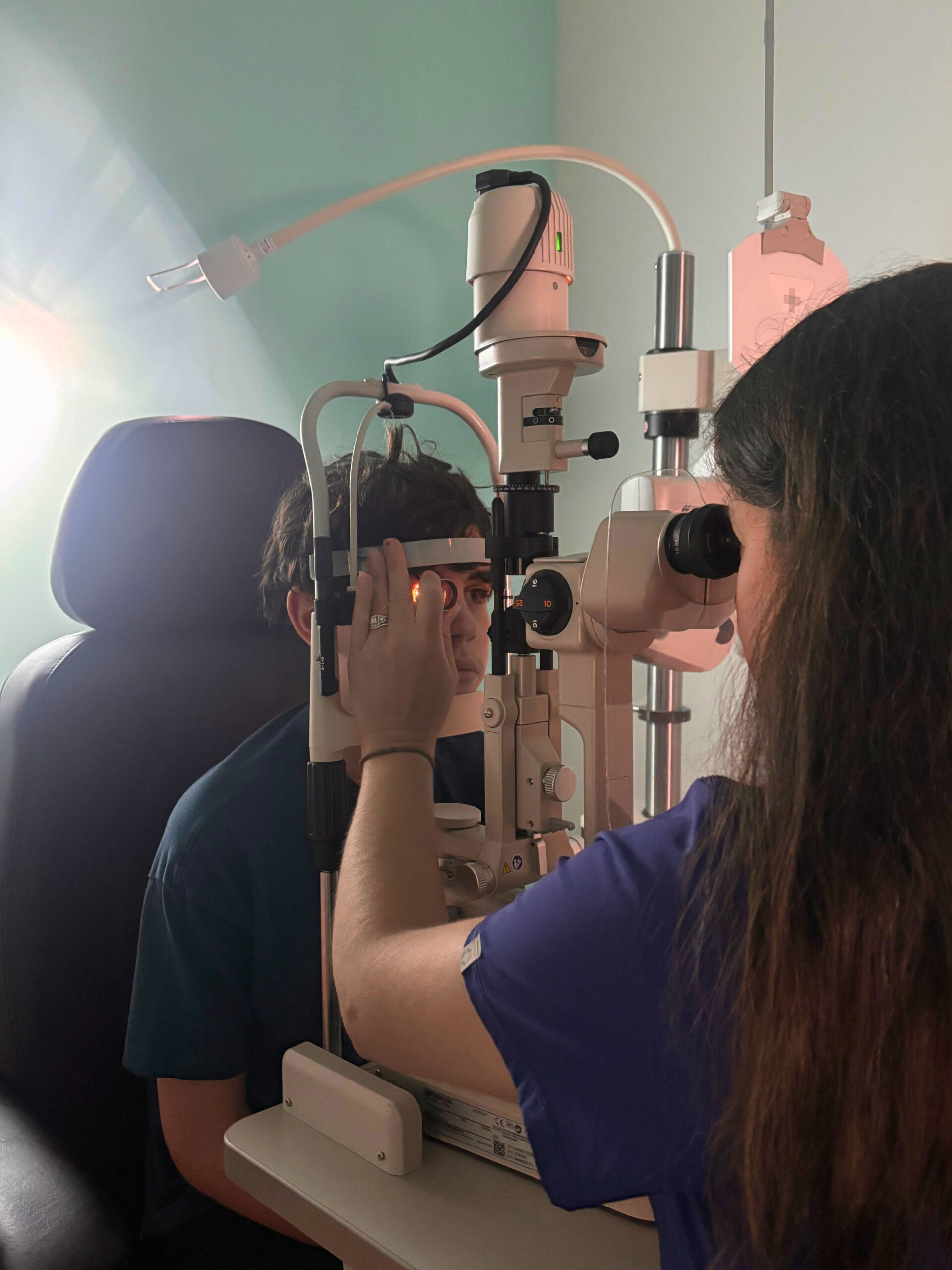
Every parent has seen their child squint in bright sunlight and thought nothing of it. But what if your child squints indoors, while reading, or watching TV? Squinting can sometimes be more than a reaction to light, it can be an early sign that your child’s eyes are struggling to focus clearly.
At Navigation Eye Care, we know how easy it is to miss the subtle clues of vision problems. Kids rarely complain because they assume everyone sees the same way they do. That’s why understanding what causes kids squinting eyes can make all the difference for their comfort and learning success.
Why kids squint
Squinting is the body’s natural way to improve clarity. By narrowing the eyes, children can temporarily sharpen their focus. If your child squints often especially when looking far away or reading up close, it may be their way of compensating for a focusing problem.
Common reasons kids squint include:
- Nearsightedness (myopia): Distant objects look blurry, so kids squint to bring them into focus.
- Farsightedness (hyperopia): Close-up tasks strain the eyes, leading to squinting or rubbing.
- Astigmatism: Blurry or distorted vision at all distances can cause squinting and eye strain.
- Eye coordination issues: The eyes may not work together smoothly, especially during reading.
In short, frequent squinting can be a child’s way of saying, “I can’t see clearly.”
Possible eye conditions
When kids squint regularly, it can point to underlying eye conditions that need attention. Some of the most common include:
- Refractive errors: Conditions like myopia, hyperopia, or astigmatism that require corrective lenses.
- Amblyopia (lazy eye): The brain favors one eye, causing the other to work harder and possibly leading to squinting.
- Strabismus (eye turn): Misalignment of the eyes that makes focusing difficult and tiring.
- Light sensitivity: Some kids naturally have more sensitivity to light, which can make squinting more common outdoors.
An Eye Doctor can perform a detailed exam to determine the cause and recommend the right treatment, such as glasses, vision therapy, or other specialized care.
When to schedule an exam
If your child squints often especially indoors or during screen time, it’s time for a comprehensive eye exam. Early detection is key to preventing long term eye strain or learning difficulties.
Here are signs that it’s time to schedule a visit:
- Frequent squinting or eye rubbing
- Complaints of headaches or tired eyes
- Sitting too close to the TV or holding books very near
- Difficulty focusing during reading or schoolwork
At Navigation Eye Care, we use advanced diagnostic technology to uncover what’s really happening behind your child’s squinting. Many parents are relieved to find that a simple prescription or vision therapy program can make a world of difference.
A simple plan for success
Here’s how to help your child see clearly again:
- Schedule an eye exam with our Eye Doctor.
- Identify whether your child’s squinting is linked to vision or eye coordination issues.
- Begin a personalized care plan that supports long term visual comfort and learning success.
Once vision is corrected, parents often notice their child’s confidence soar, reading gets easier, schoolwork feels smoother, and squinting disappears altogether.
Frequently Asked Questions
Why Is My Toddler Squinting When Watching TV?
A toddler squinting while watching TV often does so to narrow their eyes and temporarily sharpen focus. This is commonly caused by nearsightedness (myopia), where distant objects appear blurry, uncorrected refractive errors, or eye coordination issues requiring a comprehensive pediatric eye exam.
Why Does My 2-Year-Old Squint His Eyes?
A 2-year-old squints their eyes to narrow their vision field and temporarily improve visual clarity. Common underlying causes include refractive errors like nearsightedness, farsightedness, or astigmatism, as well as eye coordination issues, strabismus, or natural light sensitivity that make focusing difficult without squinting.
Why Do Kids Squint Their Eyes?
Kids squint their eyes as a natural way to temporarily sharpen their focus by narrowing their visual opening. Frequent squinting usually indicates an uncorrected vision issue or focusing problem, such as nearsightedness, farsightedness, astigmatism, amblyopia, strabismus, or eye coordination difficulties requiring professional evaluation.
Why Does My Son Keep Squinting His Eyes?
Your son may keep squinting his eyes because narrowing them temporarily improves visual clarity when struggling to focus. Persistent squinting indoors or while reading often signals an underlying vision condition, including myopia, hyperopia, astigmatism, lazy eye, strabismus, or an outdated prescription that requires an eye exam.
Take the next step
Squinting may seem harmless, but it’s often your child’s way of saying they need help seeing the world more clearly.
Call Navigation Eye Care today or schedule online to book your child’s comprehensive eye exam and give them the gift of clear, confident vision.