

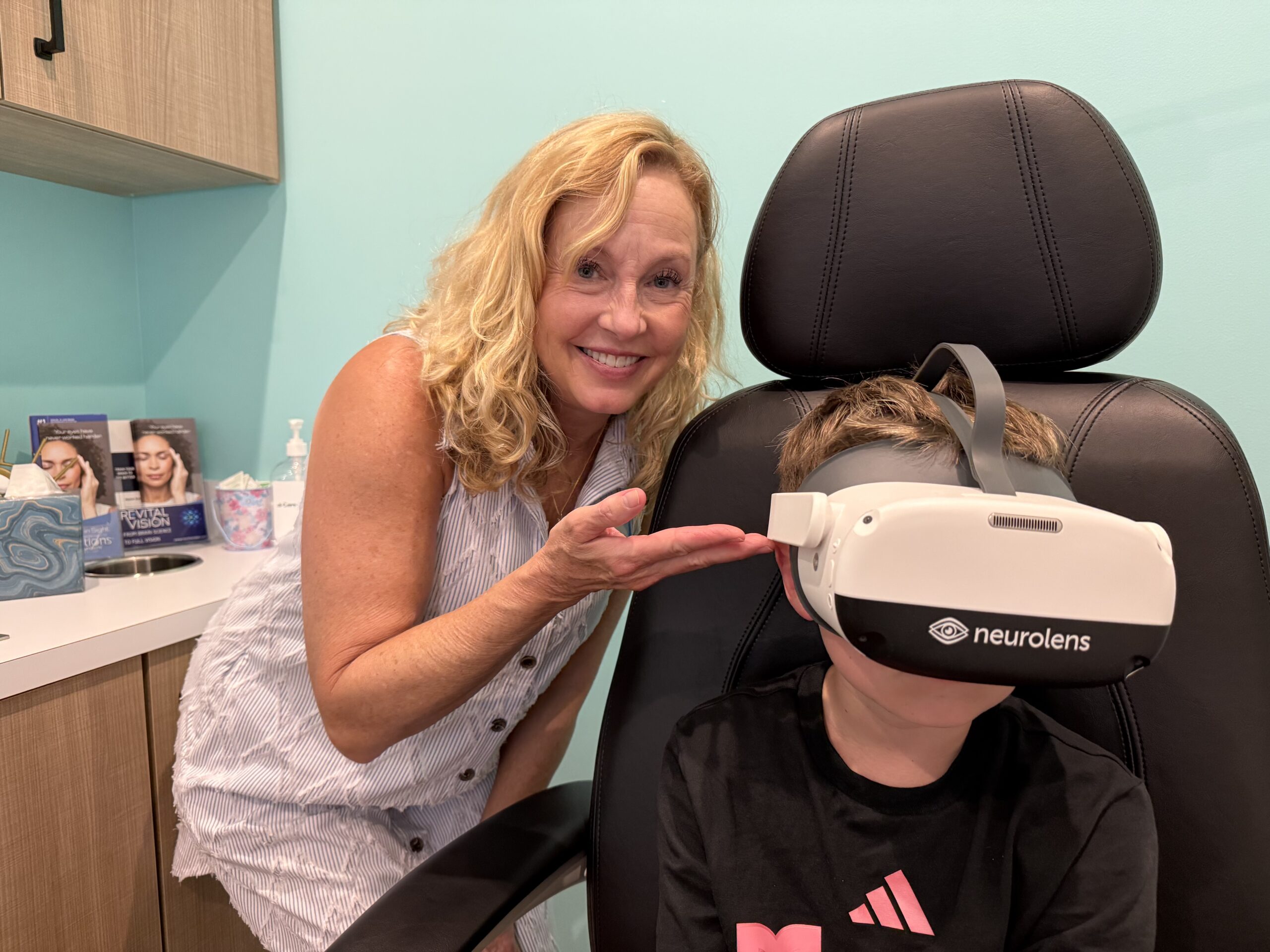
Parents often assume that a quick school vision screening or a basic check at the pediatrician is enough to detect vision problems. But screenings are only designed to catch the most obvious issues. They miss many subtle but serious concerns that can affect learning, comfort, and long term eye health.
At Navigation Eye Care, we understand the confusion around screenings versus comprehensive exams. Our role is to guide families through the difference, show the value of advanced eye exam technology, and make sure nothing important is missed.
Tools used in screenings
Screenings are quick and simple. They typically involve a chart on the wall or a handheld device to see if a child can recognize letters or shapes at a distance. While this can flag basic vision problems, it is not designed to catch issues like eye coordination, depth perception, or early signs of disease.
Think of screenings as a quick filter, not a detailed picture. They are useful but limited. Parents should know that a screening is never a replacement for a full eye exam with an Eye Doctor.
Advanced diagnostic tech in exams
This is where eye exam technology makes the real difference. At Navigation Eye Care, a comprehensive exam uses tools that go far beyond the basics. These include digital retinal imaging, corneal mapping, and tests that evaluate how the eyes focus and work together.
These tools allow us to detect issues like early glaucoma, retinal changes, or binocular vision problems that a screening would miss. Advanced diagnostic technology also helps us tailor prescriptions more accurately, reducing eye strain and headaches for kids and adults alike.
Why tech matters for early detection
The earlier an issue is identified, the easier it is to treat. Many vision problems develop slowly, and children rarely complain because they do not realize anything is wrong. Advanced eye exam technology catches these problems before they interfere with school performance or long term vision.
For families, that means peace of mind. You can feel confident that your child’s eyes are healthy, that learning is not being held back, and that potential risks are caught early. Parents often tell us they are surprised at how much more thorough an exam is compared to a screening and how much reassurance it provides.
A simple plan for success
Here is how we make it easy:
- Schedule a comprehensive exam with our Eye Doctor.
- Benefit from advanced eye exam technology that checks every aspect of vision.
- Leave with a clear understanding of your child’s eye health and a plan for success.
The result? A child who thrives in school, parents who feel confident about their family’s vision, and long term protection for healthy eyes.
Frequently Asked Questions
Are school vision screenings enough?
Screenings are helpful but limited. They may detect basic distance vision issues but often miss eye coordination, depth perception, and early disease.
What technology is used in a full exam?
Comprehensive exams may include digital retinal imaging, corneal topography, and binocular vision testing. These tools help detect issues screenings cannot.
How often should my child have a full exam?
Our Eye Doctor recommends a full exam every year for children and every one to two years for adults. Early detection is the key to lifelong healthy vision.
Take the next step
Your family’s eye health deserves more than a quick screening. With advanced eye exam technology at Navigation Eye Care, you get clarity, confidence, and complete care.
Call us today or schedule online to book your comprehensive exam.