

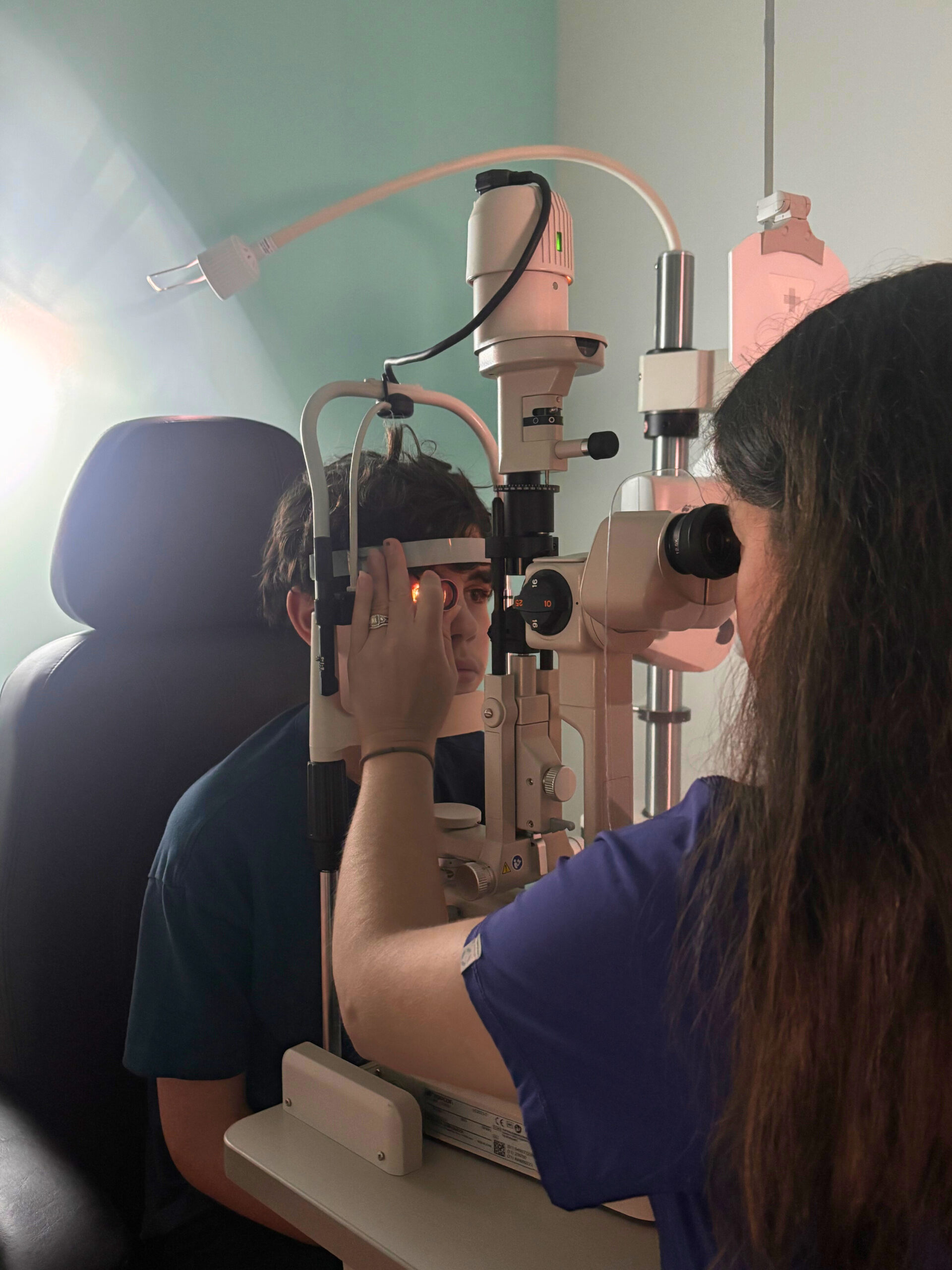
Squinting in bright sun is normal. Squinting indoors, while reading or while watching TV is different. It can mean your child is working to see clearly, and kids rarely say so because they assume everyone sees the way they do.
At Navigation Eye Care, we help parents sort out when squinting is nothing and when it is worth an eye exam.
Why kids squint
Narrowing the eyes sharpens focus for a moment, a bit like a camera’s aperture. If your child squints often, they may be making up for a focusing problem such as:
- Nearsightedness (myopia): things far away look blurry.
- Farsightedness (hyperopia): close-up work takes extra effort.
- Astigmatism: things look blurry or stretched at every distance. Read more about astigmatism in children.
- Eye coordination problems: the eyes do not work together smoothly, especially during reading.
Why does my child squint while reading?
Squinting at a book or tablet points to trouble with close-up vision. Common causes are farsightedness, astigmatism, or a problem with how the eyes focus or team up at near distances. Your child might also rub their eyes, lose their place or avoid reading. These are worth checking even if your child passed a school vision screening, because most screenings focus on distance vision.
Why is my toddler squinting at the TV?
A toddler who squints at the TV, or moves closer to it, may be having trouble seeing at a distance. Nearsightedness is one possible cause, and astigmatism is another. Toddlers cannot tell you their vision is blurry, so watch for squinting, sitting close or tilting their head.
What does frequent squinting mean?
Now and then, squinting is normal, especially in bright light. If your child squints a lot, squints indoors, or you notice it over several weeks, it often means their eyes are working harder than they should. An exam can find out why.
If your child squints or closes just one eye, mention it at the exam. That can be a sign the eyes are not lined up or are not working together.
Eye conditions that can cause squinting
- Refractive errors: nearsightedness, farsightedness or astigmatism that glasses can correct.
- Amblyopia (lazy eye): the brain relies on one eye more than the other.
- Strabismus (eye turn): the eyes point in different directions, which makes focusing tiring.
- Light sensitivity: some kids are more sensitive to light, so they squint more outdoors.
When to schedule an eye exam
Book a comprehensive eye exam if your child:
- squints often, especially indoors or during screen time
- rubs their eyes a lot
- complains of headaches or tired eyes
- sits very close to the TV or holds books close to their face
- has trouble focusing on reading or schoolwork
Often the fix is simple, like a pair of glasses. If the problem is how the eyes work together, vision therapy may help.
Frequently asked questions
Is it normal for a 2-year-old to squint? Squinting in bright light is normal at any age. Frequent squinting indoors or at the TV is worth an eye exam, even at 2. Children do not need to know their letters to be tested.
Is squinting bad for my child’s eyes? Yes, frequent squinting is not good for the eyes and can cause eye strain. It is also a sign of a vision problem worth finding. Some of these problems, like amblyopia, are easier to treat when they are caught early.
Take the next step
If you have noticed your child squinting, call Navigation Eye Care at (757) 529-6889 or book a pediatric eye exam online.
Related reading: Celebrating milestones in your child’s vision development · A guide to detecting visual problems in infants · Astigmatism in children: what parents should know